Canyon Ridge: Cascade Backcountry in 16mm
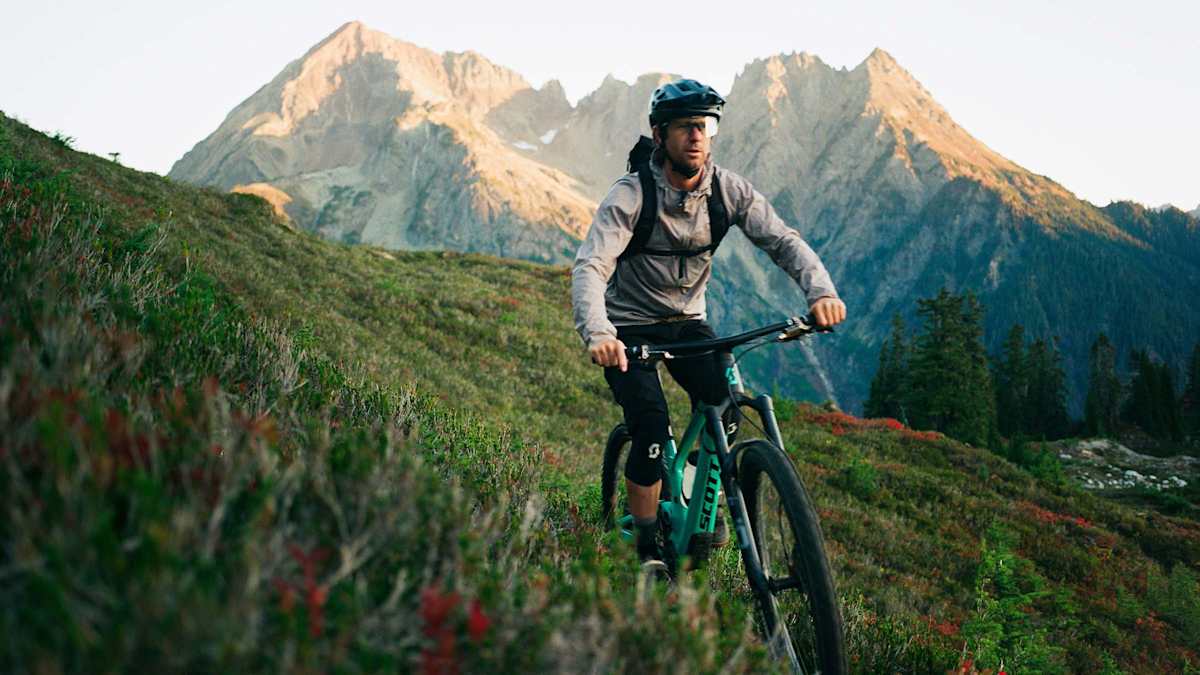
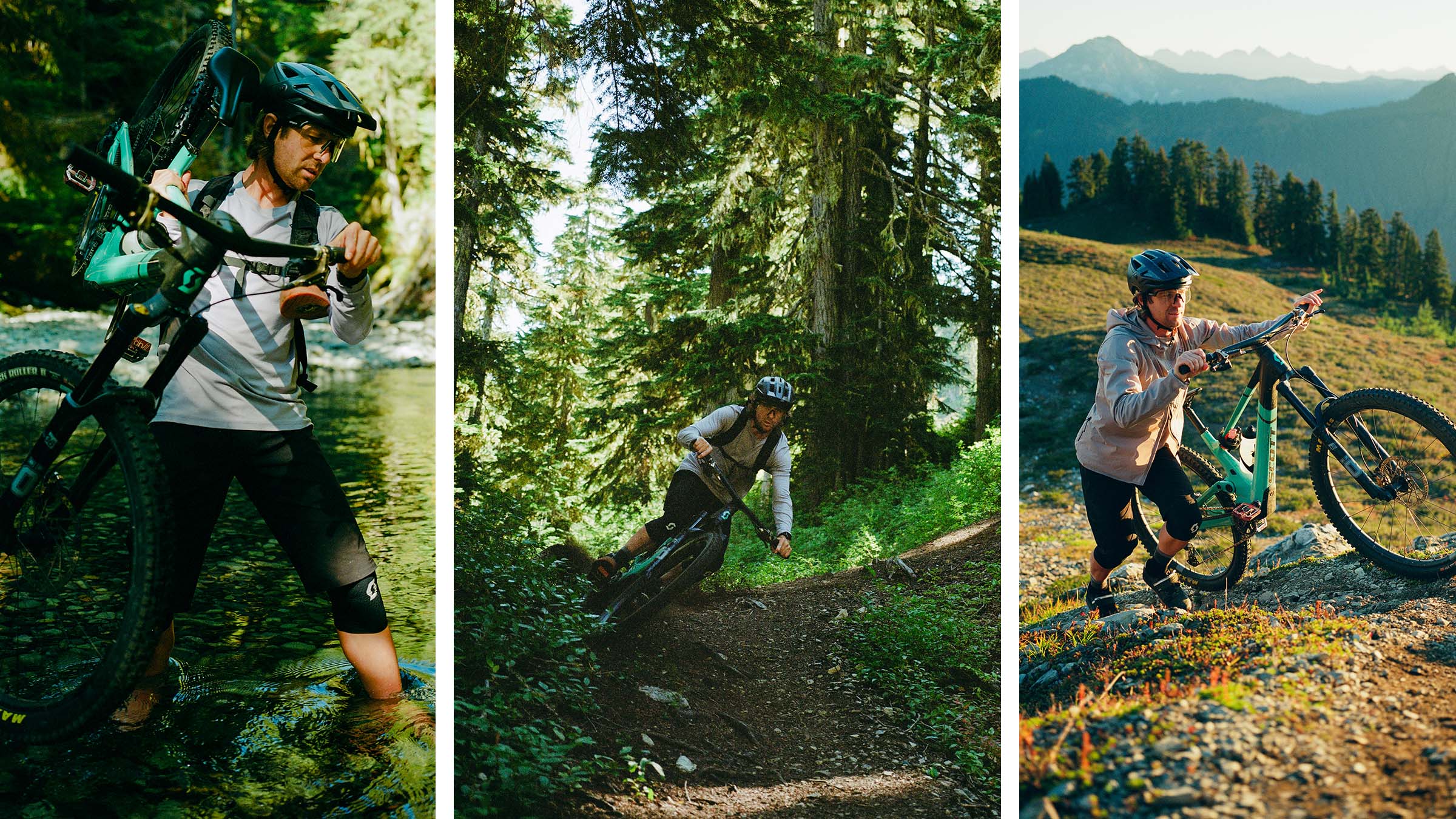
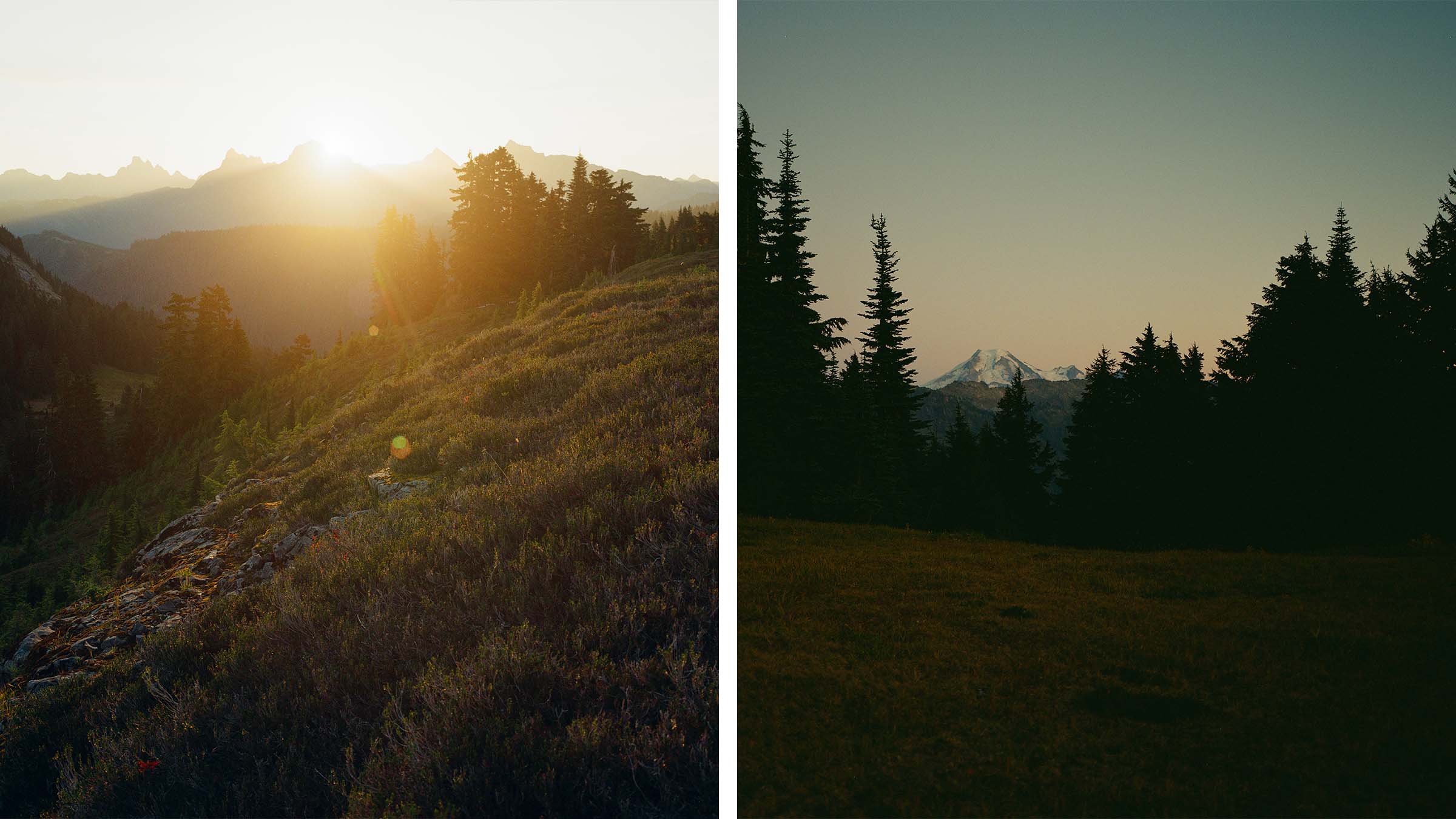
Tanner Stephens and Drew Boxold packed their bikes, analog cameras, film, light meters, and the essentials needed to get through four days in the Washington backcountry. The goal was to shoot a full-length MTB film entirely on 16mm—a project that pushed their creative boundaries and honed their skills as they settled into a rhythm of shooting, riding, and repeating. The simplicity of this rhythm, set against the backdrop of endless mountains and far from the hustle and bustle of everyday life, was exactly what they needed to take a breath and remember just how small we are in the world.
We hope this inspires people to get out and find the kind of adventure that lets you pause and reset. Remember—it doesn’t have to be epic to be awesome. Put that phone on airplane mode and go for a shred!
We caught up with Tanner and Drew to chat about the film. Their adventure was too good not to share, so we asked them a few questions about what went into it.
What made you want to take on a four-day backcountry film project? Is there something about the mountains that keeps pulling you back?
Tanner Stephens: I’m a person who lives in their own head or imagination, for better or worse. Being a dreamer, day and night, is the only experience I know. I love learning, being curious, thinking about all sorts of things we encounter in life, and trying to understand why certain things are the way they are. However, sometimes it gets overwhelming and I need a bit of a reprieve from myself. This is where bikes and nature have helped me find some solace between my ears. Sometimes we just need a bit more perspective on life and to feel small amongst the rest of the world
Does the title “Canyon Ridge” have special meaning? How did you and Drew find this epic location?
Tanner Stephens: Canyon Ridge is simply the name of the trail. We toyed with other titles or names, but Canyon Ridge seemed to fit the best with how the video goes between canyons and ridges, and also metaphorically with the highs and lows of a trip into the backcountry.
Drew and I are always conceptualizing projects and thinking about stories we want to tell, and this one had been on the list for about 4 years. Drew went to school at Western Washington University in Bellingham, close to where this project was filmed and had done some recon on it. We always wanted to make it back Canyon Ridge and it only made sense to film it on 16mm film. With projects like this, our goal is not to just make a film about riding a bike. Instead we want to make something that will get people to view the world in a different way.
This seems like an all-in, full-commitment adventure once you're on the trail. Was it challenging to reach the backcountry locations you wanted to showcase?
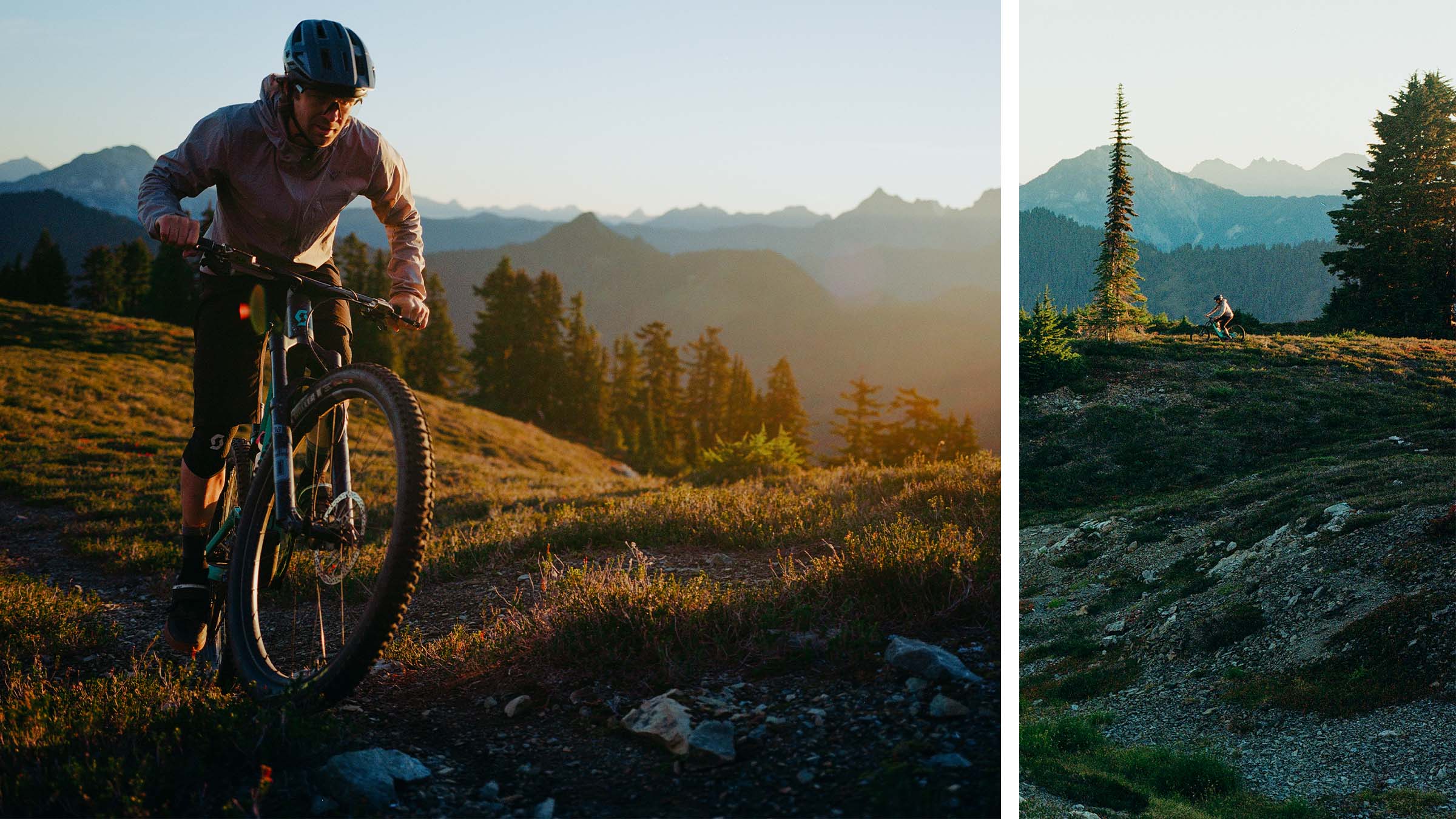
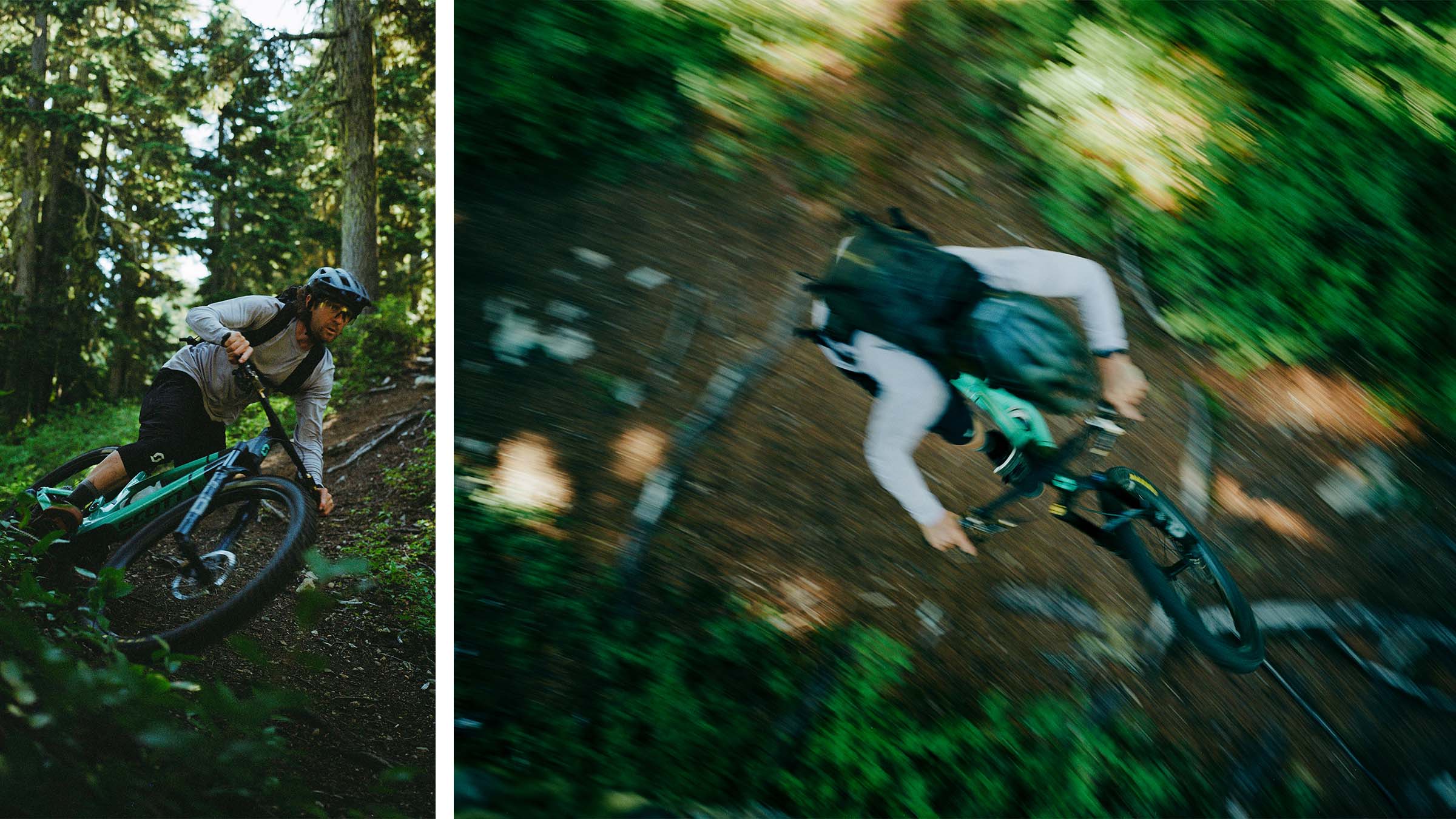
Tanner Stephens: We shot for four days, sunrise and sunset. We had some key scenes we wanted to film, which called for particular locations that weren’t on Canyon Ridge, so we checked all those off in the first two days. Then we made our way to Canyon Ridge for the next two days. The actual riding parts were a bit difficult to figure out because the trail was pretty beat at the end of the summer and doesn’t get a whole lot of mountain bike traffic. Primarily it’s a moto and hiking trail, so doing it by bike is a bit different which meant we really had to take our time with finding sections of trails that were worthy of filming and had good light.
What kind of challenges came up while pulling this project together?
Drew Boxold: The main oversight on our part was running out of water at the halfway point of Canyon Ridge, not much around when you’re on a ridgeline late in the season. We ended up finding a nasty stagnant pond; thankfully, the filter did its job. Besides, it’s not a proper shoot without a little dehydration.
Tanner Stephens: A big challenge was packing in everything for shooting and surviving. Drew had his big camera backpack that probably weighed close to 40 pounds, and I actually had two packs, one with our tent, food, jetboil, and sleep stuff, and the other pack, which I was riding in for the video, was strapped on top of the gear pack.
Tell us a bit more about the camera you used for this project.
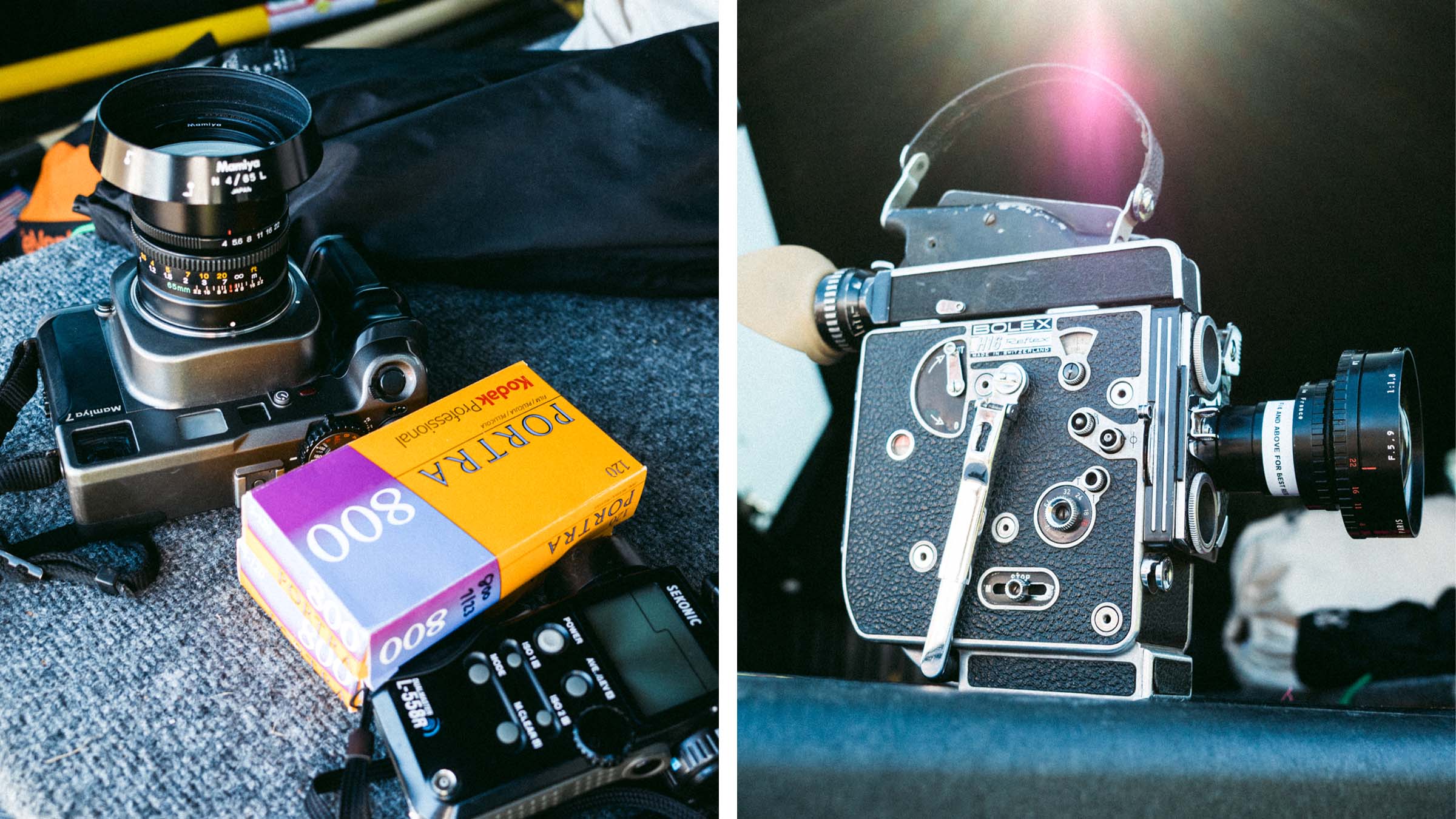
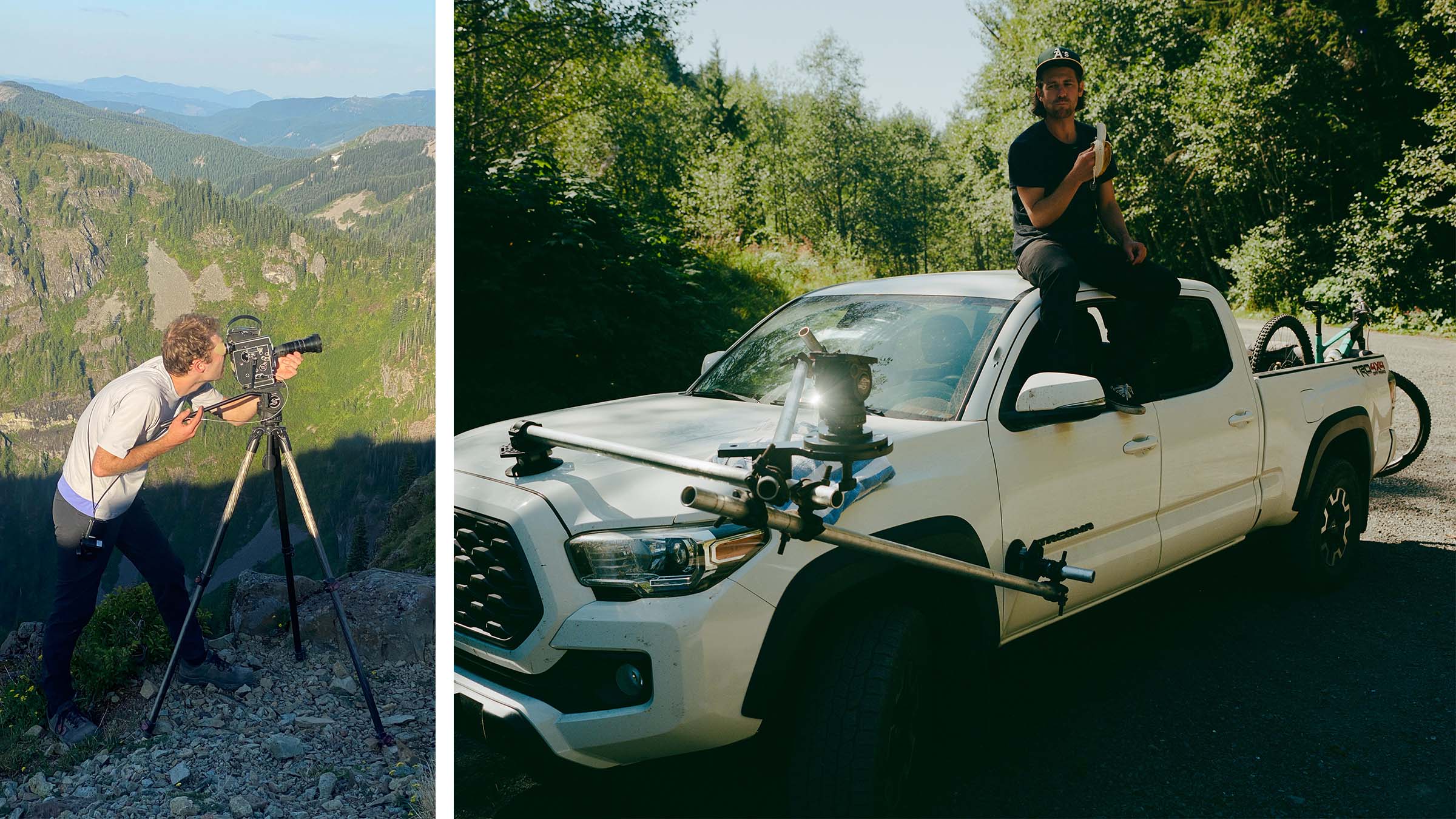
Drew Boxold: It was made in Switzerland around 1971. This Bolex H16 camera has been my go-to since I bought it in 2019. I think it came from Transylvania, so I like to think it saw some Iron Curtain historical events or some vampire encounters. Either way, I had it modified to shoot Super 16mm, which is slightly wider than regular 16mm. Basically turned it from 4x3 to nearly 16x9 aspect ratios. The Bolex is made completely of glass, steel, and brass, with few plastic parts and no batteries. Just springs and gears to get it to run. Of course, we brought small spare batteries for the light meter, gimbal, and microphone, but no need to bring along heavy camera batteries. The weight savings is more or less nullified as the Bolex is quite heavy.
What draws you to shooting on a 16mm film camera? It comes with a lot more challenges—so why choose this format?
Tanner Stephens: Simply put, I don’t want to have the ability to do multiple takes. Shooting on film forces you to lock in and do your job. It’s a lot of pressure, but it makes you be fully present and in the moment.
Drew Boxold: It’s a completely different mindset. Doubt can creep in at any point if you let it. There’re just certain things you can’t think about or talk about because you would get sucked out the moment. There could be a hair in the film gate ruining the shot. The meter you used to figure out your exposure settings could have been tricked by a rogue ray of light. Light could sneak into the camera and ruin footage before you even shoot it. There are just so many issues that could arise and negatively impact the project. This kind of goes back to why do it in the first place. Pushing out all this internal noise and focusing solely on what you can control.
Shooting with an old analog camera and film must’ve come with its fair share of hurdles—but there had to be some real advantages too. What made it worth it?
Drew Boxold: I think setting creative limitations is super important. Too many toys in the toy box and you’re bound to lose your way. While I would have loved to use a drone, cable cam, 4 K, 6 K, slow motion, etc., all of that would have just sucked us away from the process of making it. Tanner and I have slowly adapted to filming in this slow, methodical process, and for a project like this on a trail like this, it only made sense to do it fully on film.
There were small things we had to figure out on the fly. I had quite a few things shot listed ahead of time, and it is always a balance of executing what you have in your head, but also not being bummed if it isn’t exactly what you were thinking. The car mount on the hood was a little tricky, and I’ll let you guess on how we triggered the camera to record while driving.
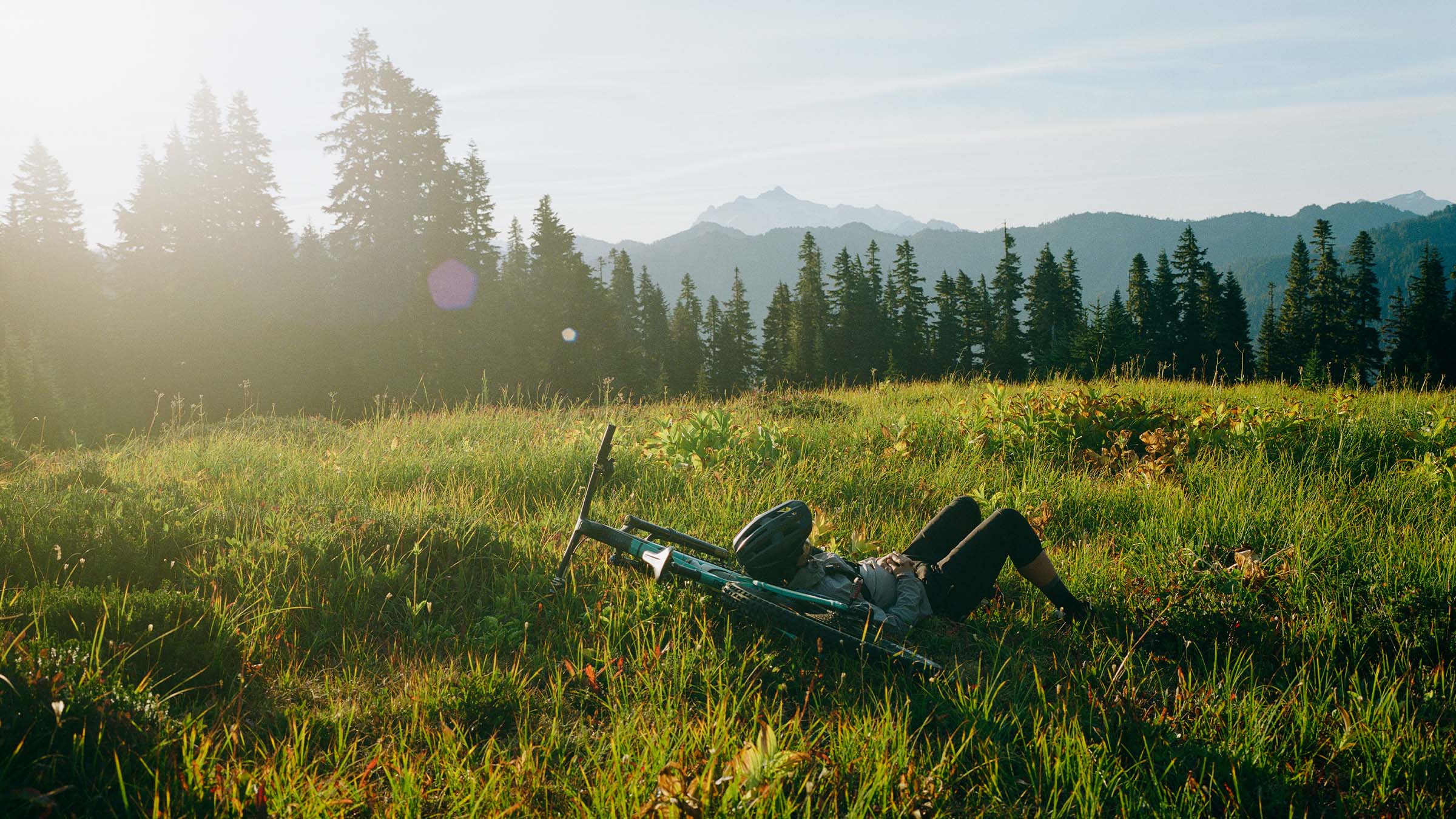
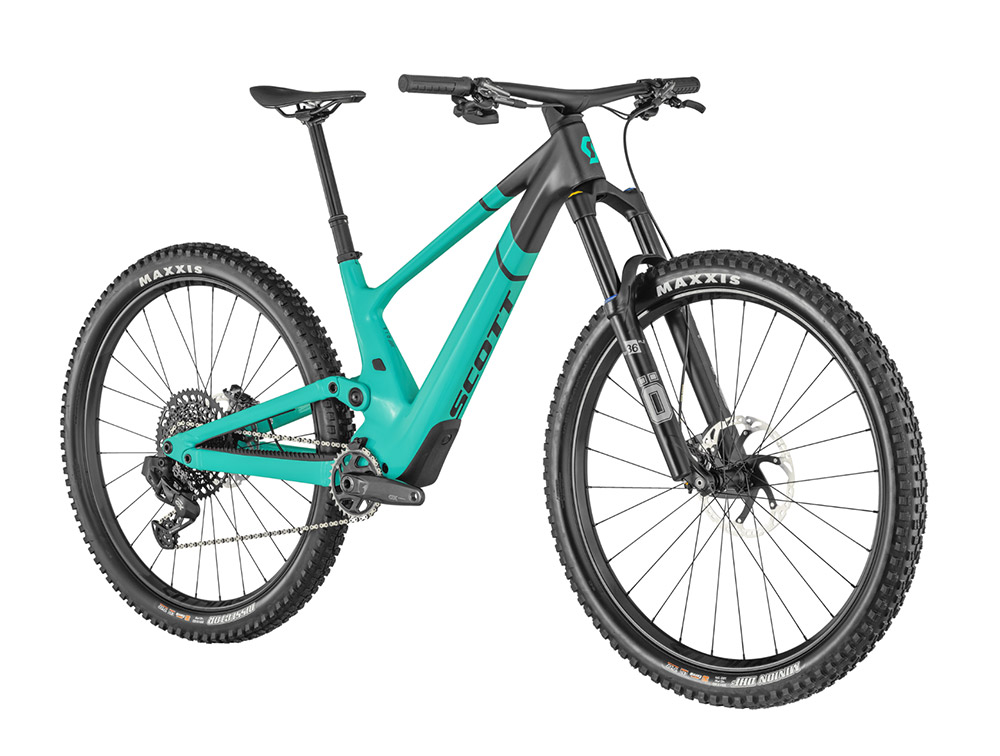
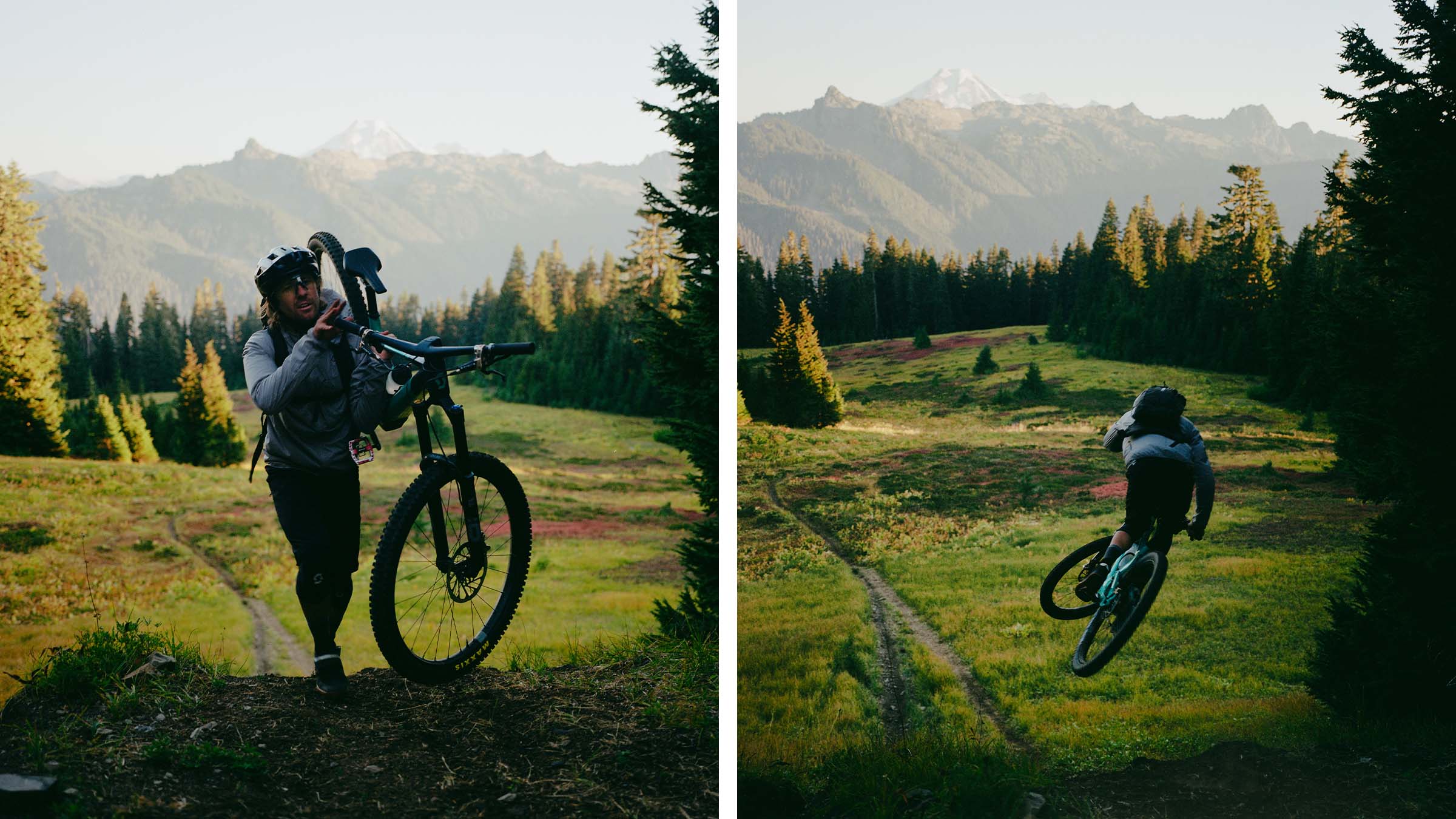
Drew Boxold: There are so many Bob Ross happy accidents when you get the film back. These ancient lenses paired with the Bolex optical design, you really get flares and flash cuts like nothing that can’t be captured or recreated digitally. Sure, there are amazing colorists out there that can perfectly match the look, feel, and texture of film. Still, I have yet to see anyone digitally match the handmade feel of Bolex footage like this. Remove Tanner with his new kit and Scott Genius, and these shots could be from a newly restored nature doc from 1971.
Since the Bolex only shoots visuals, how did you approach sound for the final film?
Drew Boxold: I would have Tanner do a run, record it on the Bolex, then have him do it exactly the same for a second time and record it with a microphone. Before Tanner would drop for a second run, I would whisper into the mic describing the film shot angle, section of trail, etc, so I would be able to sync it up in the edit later. A bit convoluted but when every 10 second take costs around $5, we couldn’t afford to use a clapper board to properly sync audio.
What does this project mean to you, and what do you hope people take away from it?
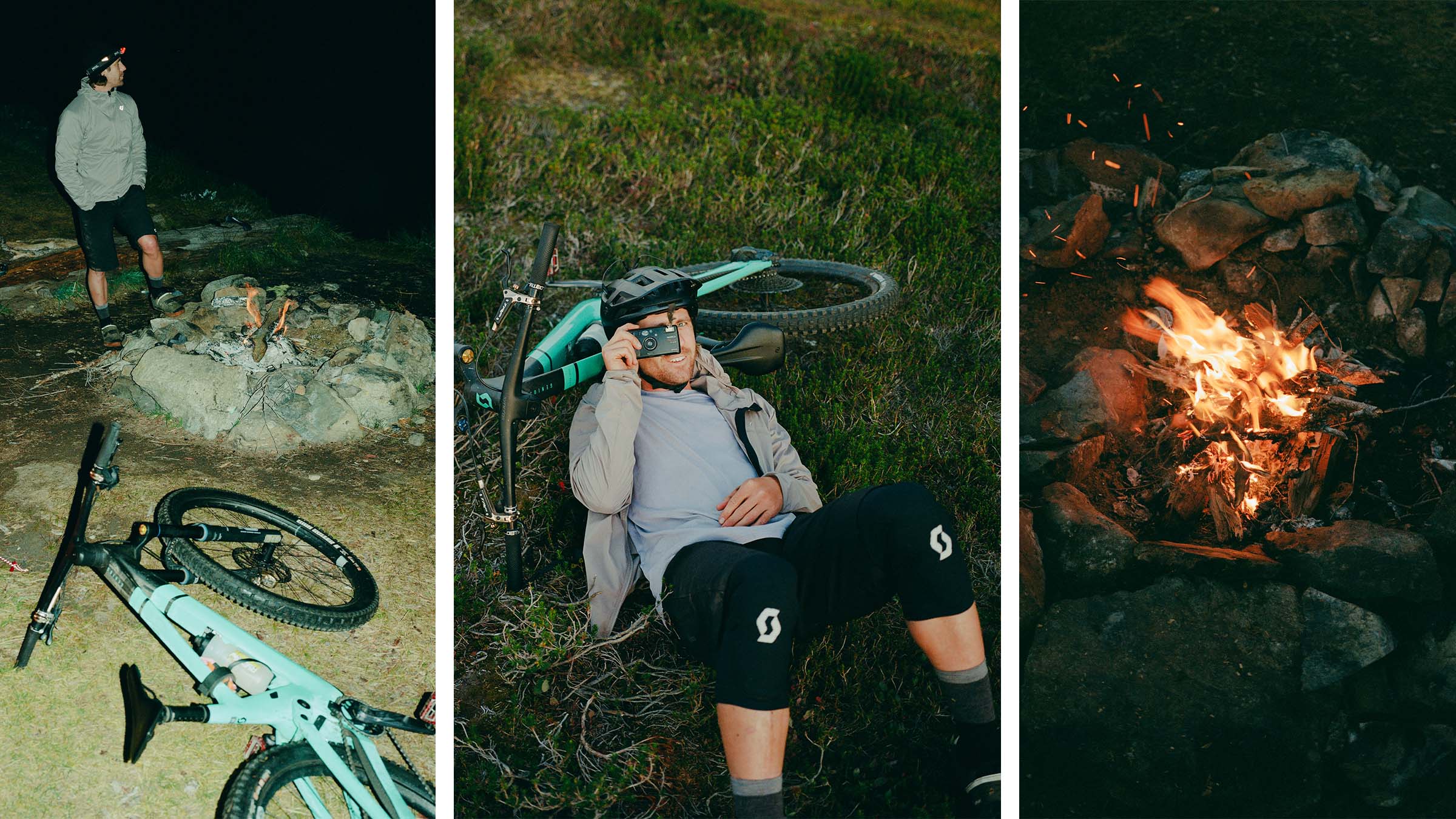
Tanner Stephens: It encapsulates a time in our lives where we both were early on in our creative careers as freelancers and didn’t have a whole lot of consistent work, so we made the entire film on a shoestring budget and couldn’t even afford to get all the film processed until a few months after it was shot. For me the entire story is about finding stillness in my own head by immersing oneself in the beauty of nature and struggle.
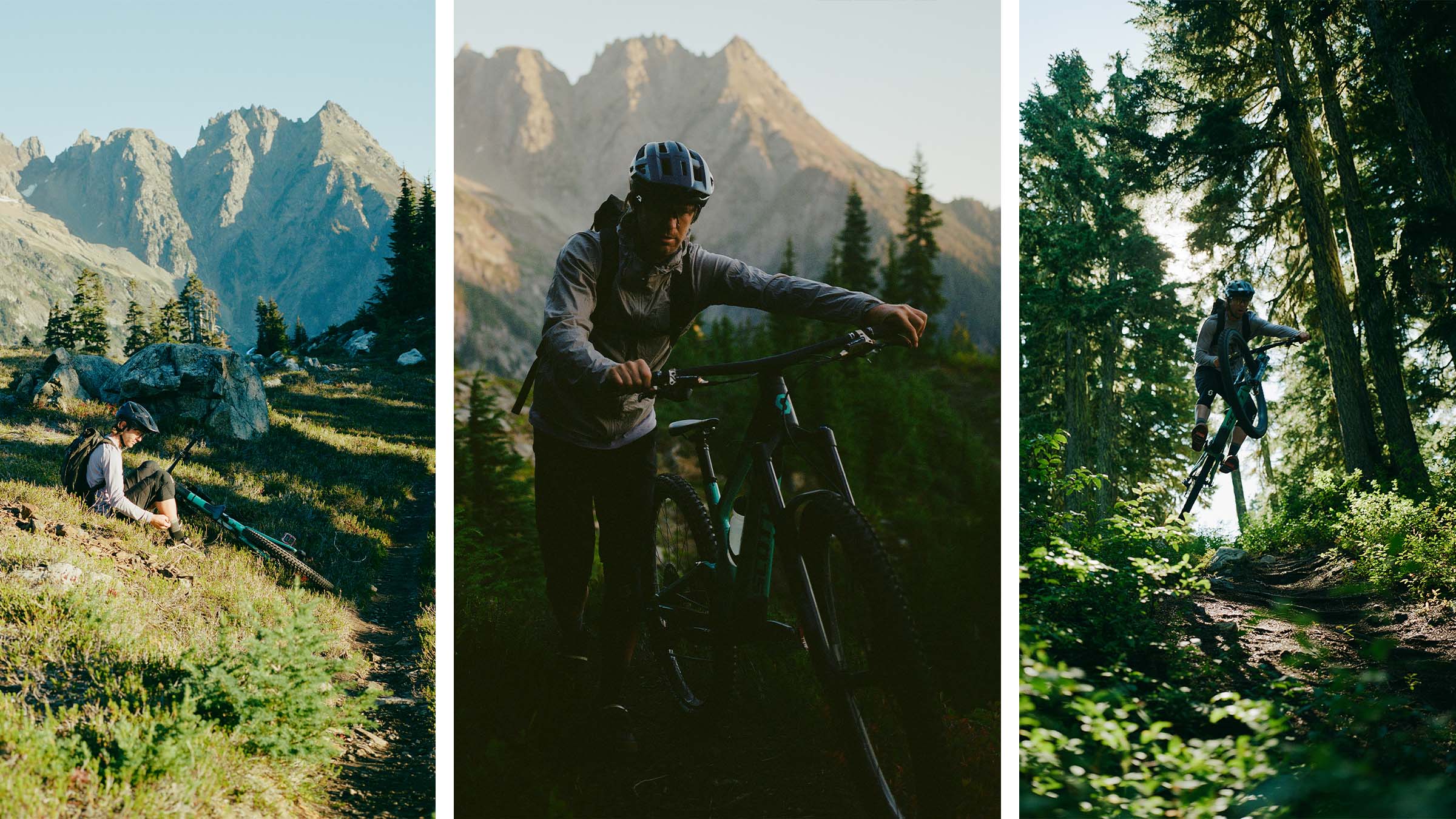
Drew Boxold: There’s an established formula when it comes to mountain bike videos now. It has made everyone up their game which has been amazing to watch and try and be apart of, but for this I truly want to strip that all back and take a much more simple approach.
Tanner Stephens: If there is something that someone takes away from this film, I hope that it provokes thought. I hope it’s a film that people will go back and rewatch and be able to reflect on their own experiences. Maybe it shifts someone’s perspective on the world, but maybe it’s just another bike film, and someone just enjoys the riding.
RELATED PRODUCTS: