How to Choose Ski Goggles
Ask an experienced skier for a rundown of snow conditions and the conversation will quickly digress into the most specific details of powder, corduroy, crud, ice, and more. How did they see all of that on a single ski slope?
Well, of course, it takes time to refine your appreciation for the variety of snow conditions. But a pair of good ski goggles with quality optics is the right starting point for anyone.
In this guide, we’ll explain everything from how to choose the right lens tint to the difference between lens shapes to other factors, such as interchangeable lenses and over-the-glasses goggles. With the right eyewear, your face will be protected and comfortable, and your vision will be enhanced.
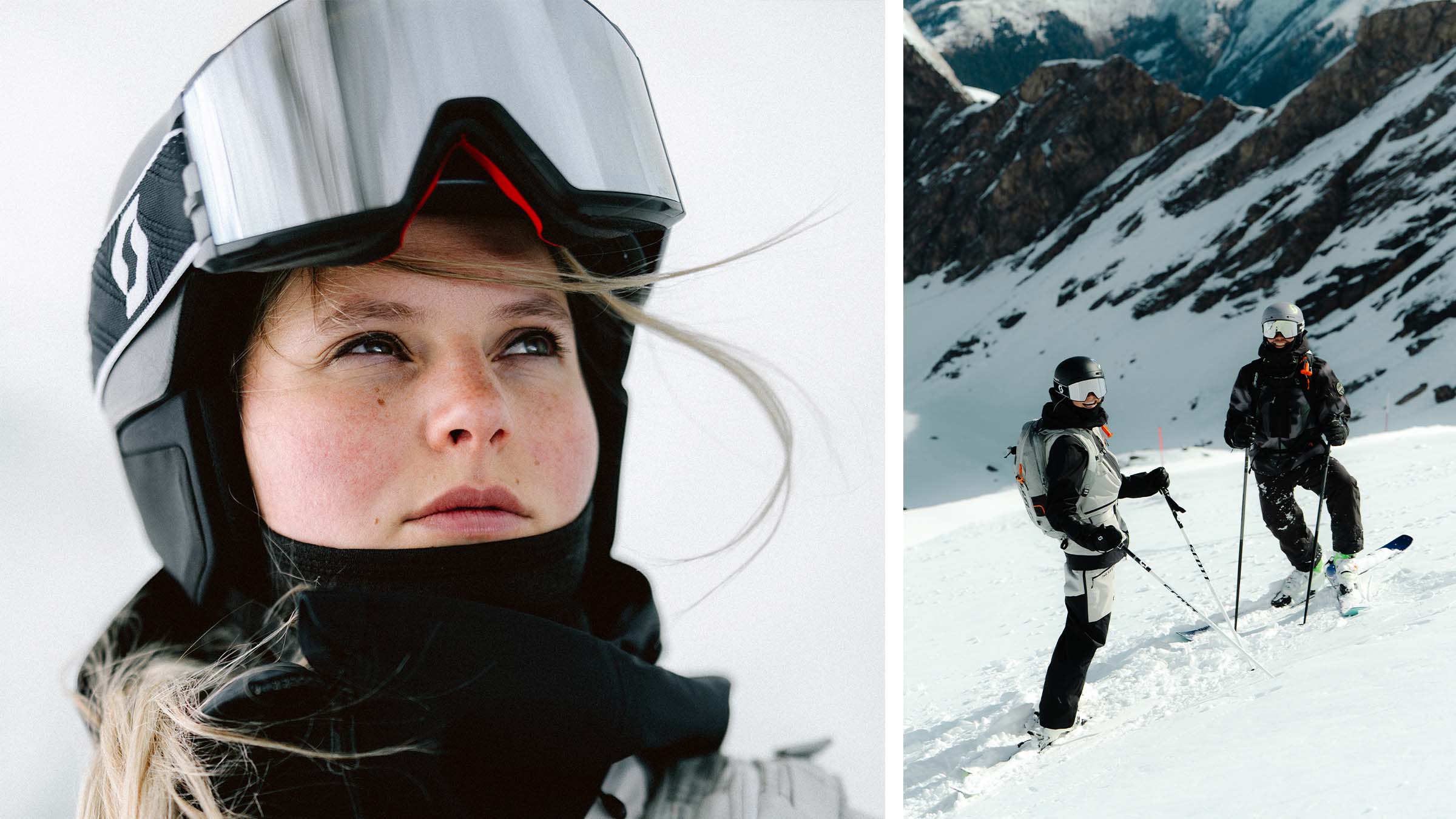
Choosing Goggle Lenses For Different Light Conditions
The first and most obvious difference between a range of goggle options will be the lens tint. You can choose between everything from a clear lens to a dark, mirrored lens that might pass as a solar shield on a NASA space suit. No matter how much tinting you want, all SCOTT lenses block out 100% of harmful UV rays.
Don’t lose too much sleep over what % Visible Light Transmission (VLT) is optimal. Let’s simplify things into three general categories: Low light, intermediate light, and full sunlight.
For night skiing or foggy days, a transparent lens with 80-100% VLT is best. It’s not the ‘80s; no one wears their sunglasses at night anymore. SCOTT's S0 lens is meant for these conditions. Also, a stormy day falls under the low light category. You might want a clear lens for a free-refills powder day, but a light tint is ideal for better contrast. In that case, a 43-80% VLT S1 lens is a great option.
You’ll encounter intermediate light on a typical day of skiing in most locales. There might be periods of clouds along with some sunshine. A versatile lens is best for most days on the mountain. And it is especially nice when you duck into the glades, where it will be shady. SCOTT’s S2 lens offers four different lens colors with 18-43% VLT.
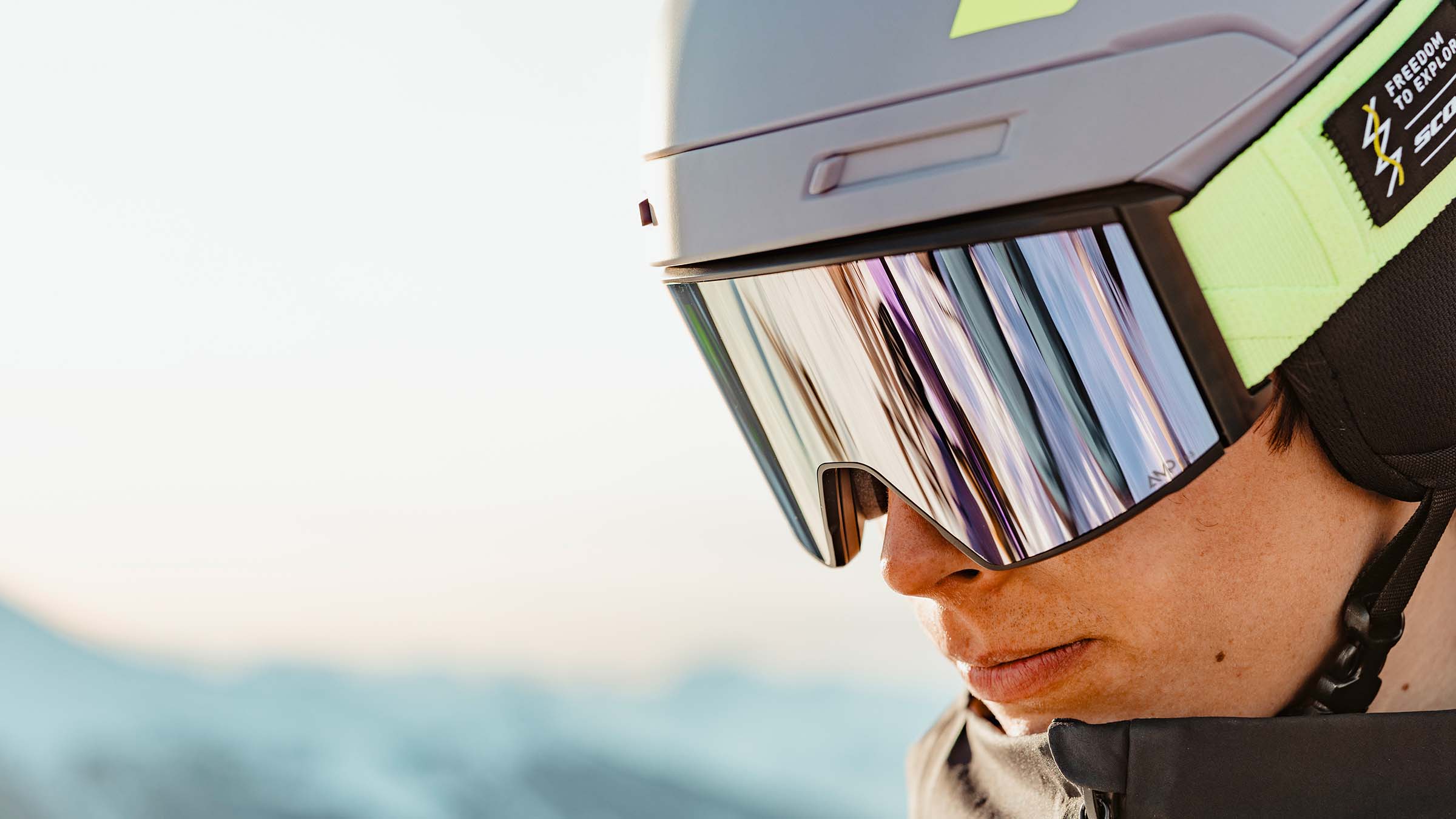
In full sun, perhaps on a glacier or at high altitude, a dark tint, mirrored lens provides the best optics. SCOTT’s S3 and S4 lenses fall into this category with 8-18% VLT and 3-8% VLT, respectively.
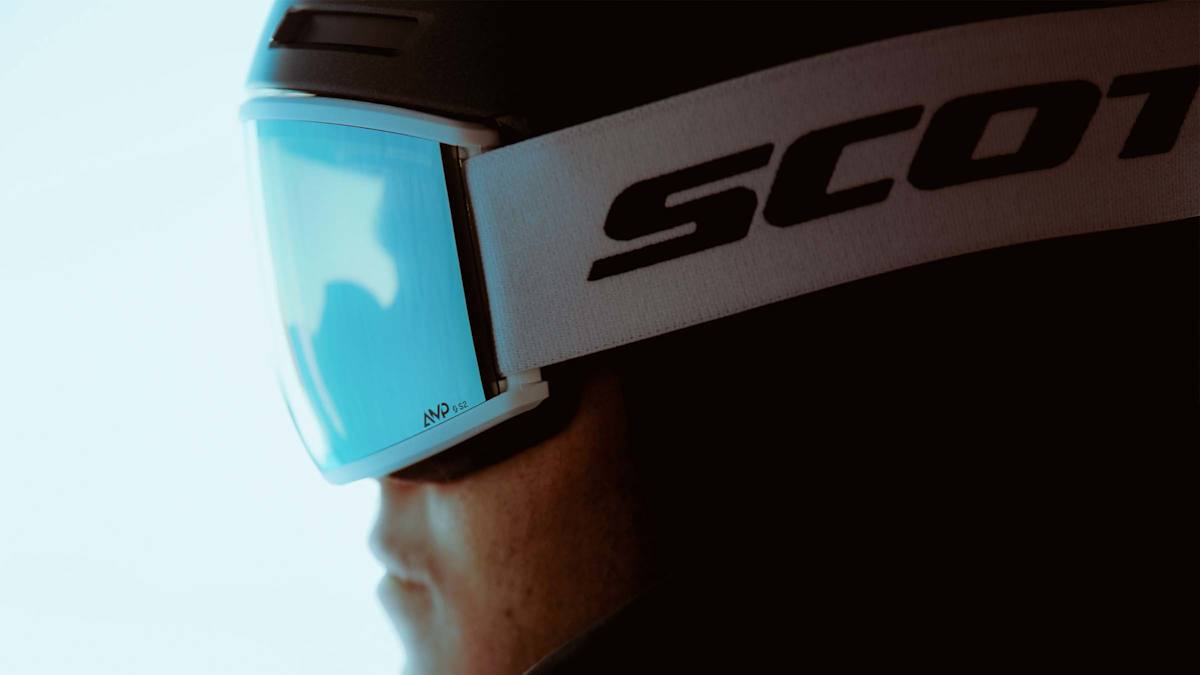
As well as the lens tint, consider how some lenses provide more contrast to improve your depth perception and enhance details on the slopes. SCOTT’s Amplifier lens technology is found throughout its goggle line. Amplifier improves contrast and clarity by optimizing blue, orange, and red wavelengths.
Finally, if you want an all-weather lens tint that suits variable light conditions, a photochromic lens offers the best of both worlds, from storm skiing to bluebird days. SCOTT’s suite of Light Sensitive (LS) photochromic lenses adapt to sunlight intensity in a matter of seconds, and this technology is available in three variants:
1. S1-S3: Light Sensitive Bronze Chrome
2. S2-S3: Light Sensitive Red Chrome
3. S2-S4: Light Sensitive Blue Chrome
LS lenses are a popular choice for backcountry skiing, as cloud cover can change significantly during an all-day adventure in the mountains.
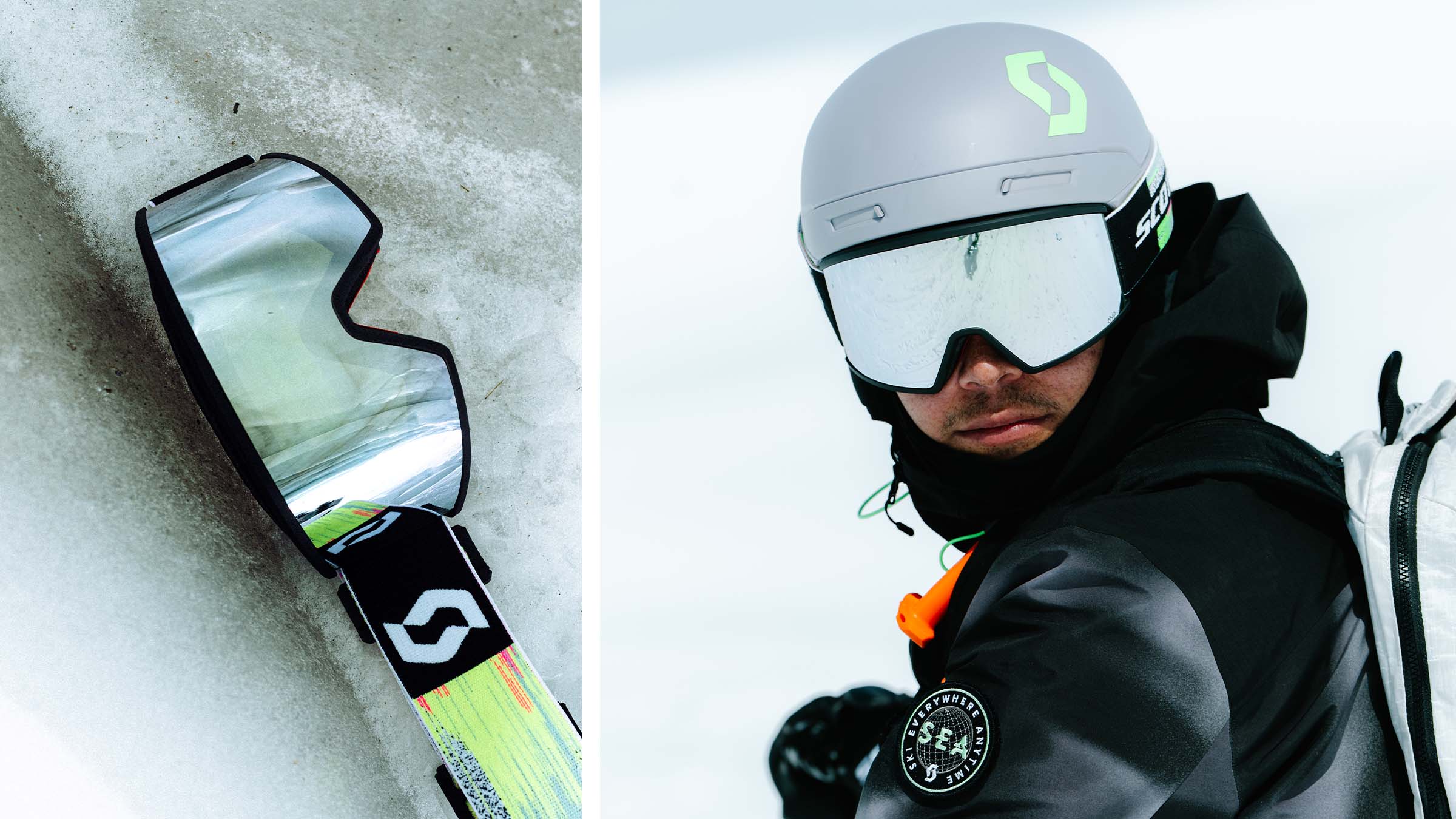
Lens Shapes for Ski Goggles
Once you’ve settled on a goggle tint, lens shape is another consideration. There are two key shapes: Cylindrical and Spherical.
Cylindrical lenses are curved on one axis — like a cylinder. This provides maximum field of vision and a classic goggle shape. Spherical lenses are curved on two axises, horizontally and vertically. This lens shape helps reduce glare and it also minimizes fogging.
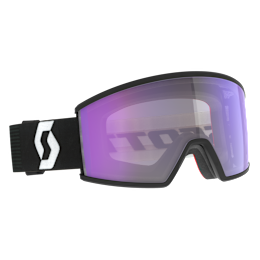
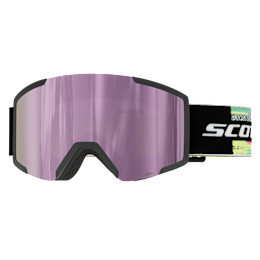
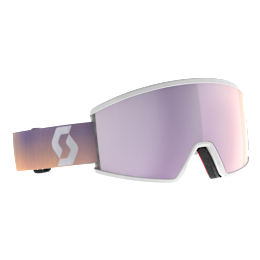
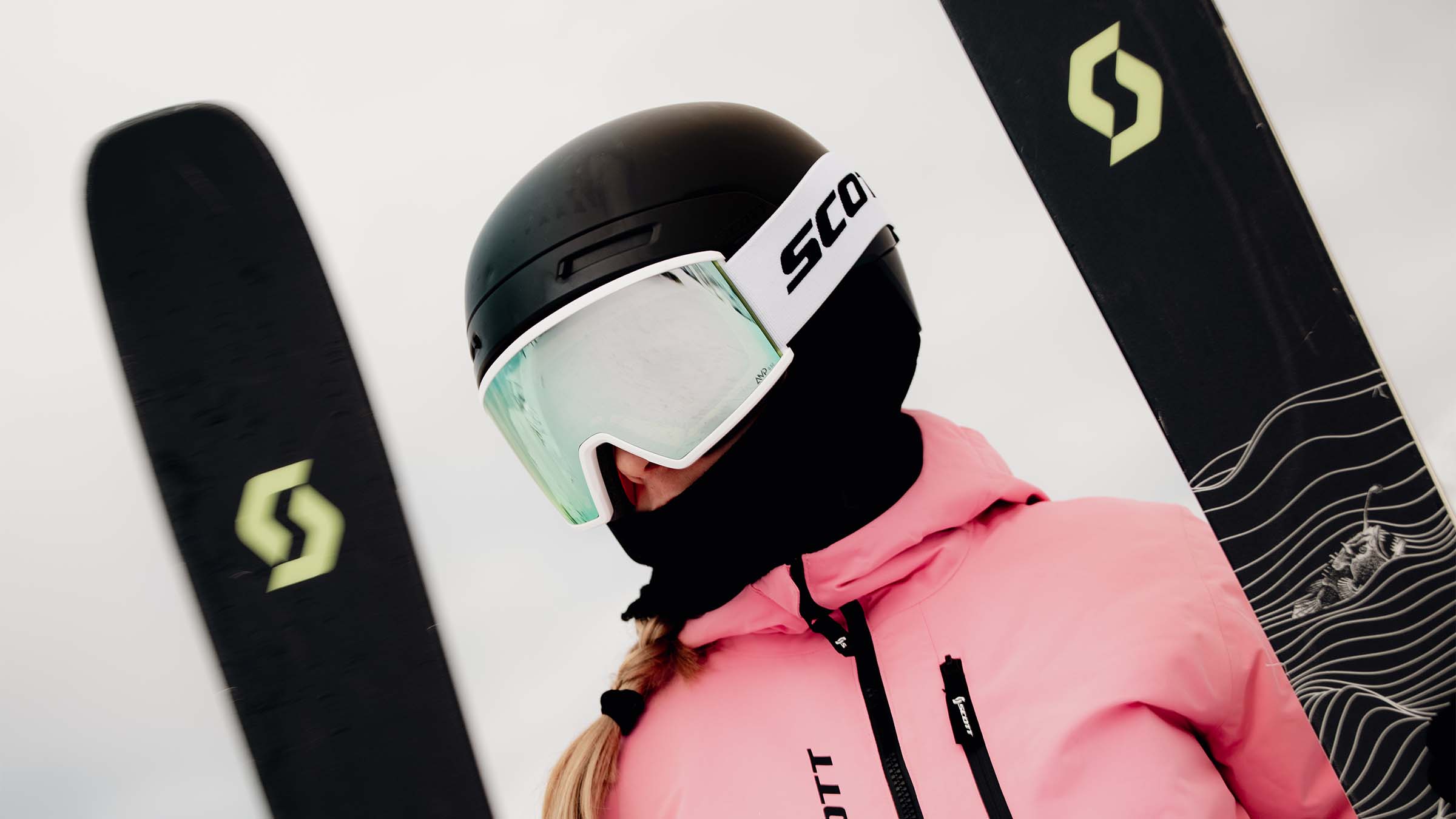
SCOTT offers a variety of goggles with both lens shapes. The Faze II is an example of a Spherical goggle, and the React is one of SCOTT’s cylindrical options.
The choice between cylindrical and spherical options comes down to your fit preferences, which field of vision works for you, and of course, which style you like. Fortunately, all SCOTT goggles are a perfect fit with SCOTT helmets for seamless compatibility. Plus, they offer 2 or 3 layer molded face foam to further prevent fogging.
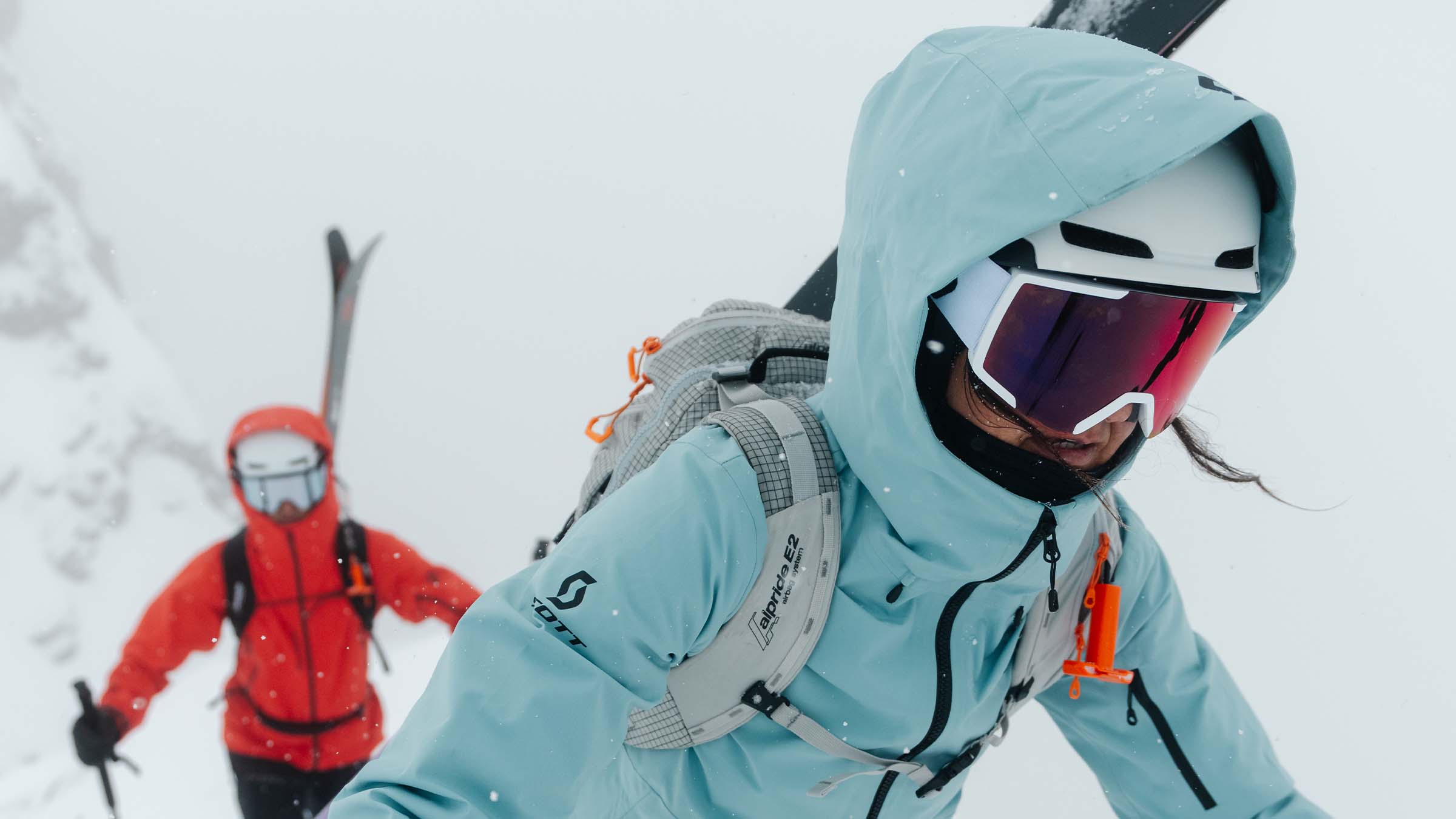
Other Considerations when Choosing Ski Goggles
There are a few other features worth mentioning as you sharpen your focus on the best pair of goggles for you.
Some skiers wear prescription eyeglasses under their goggles. In this case, there is a special goggle fit available, known as Over the Glasses (OTG). It works exactly the way it sounds, and SCOTT has several OTG models that comfortably accommodate glasses, such as Sphere OTG and Unlimited II OTG. Using spherical lenses, these goggles allow room for eyeglasses and better ventilation to prevent fogging.
If you’re particular about your lens tint and like to optimize your goggles for any given day on the slopes, go with interchangeable lenses. This way, instead of buying multiple complete pairs of goggles, you can get a few spare lenses of different tints to swap as conditions dictate. SCOTT calls these Lens Changing Goggles (LCG), a designation you’ll see on a few models, including the React which relies on a simple magnetic system to make lens changes easy — even with your gloves on.
SCOTT’s React goggles are also great for backcountry skiing because they allow skiers to swap lenses easily when clouds roll in (or out).
Conventional ski goggles fit most faces, but not all. That’s why some goggles are offered with smaller frames to fit smaller faces. Look for SCOTT’s Compact options like the LCG Compact goggles.
Ski Goggles FAQ
Q: How do I prevent my goggles from fogging up?
A: Start by making sure your goggles fit your helmet cleanly. SCOTT goggles and helmets are always a perfect match. Your goggles are designed to ventilate most effectively while on your face, so avoid putting them on top of your head or helmet. Fogging is often caused by your body’s warmth traveling up through the collar of your jacket to your face, so try unzipping your jacket a bit if you are on the lift or getting a head start on apres.
Q: How do I store my goggles?
A: Before you put them away at the end of the day or the season, allow your goggles to fully dry out. Once that’s done, store them in a microfiber pouch or a hard case to protect them from dust.
Q: How do I clean my ski goggles?
A: Carefully remove any excess snow or debris first. Then, take your goggles’ clean microfiber bag and gently wipe the lens from side to side. Avoid wiping in a circular motion. Never place your goggles face-down on a surface. Wash your microfiber bag as needed.
Conclusion
Whatever your ability level or skiing style, vision is critical for carving turns, charging powder, pounding moguls, hitting booters, or whatever else you want to do on the mountain. With the right lens tint for your conditions, a lens shape that suits your needs and style, and a perfect fit, you’ll see skiing in a whole new light.