
How to Pick the Right Ski Poles
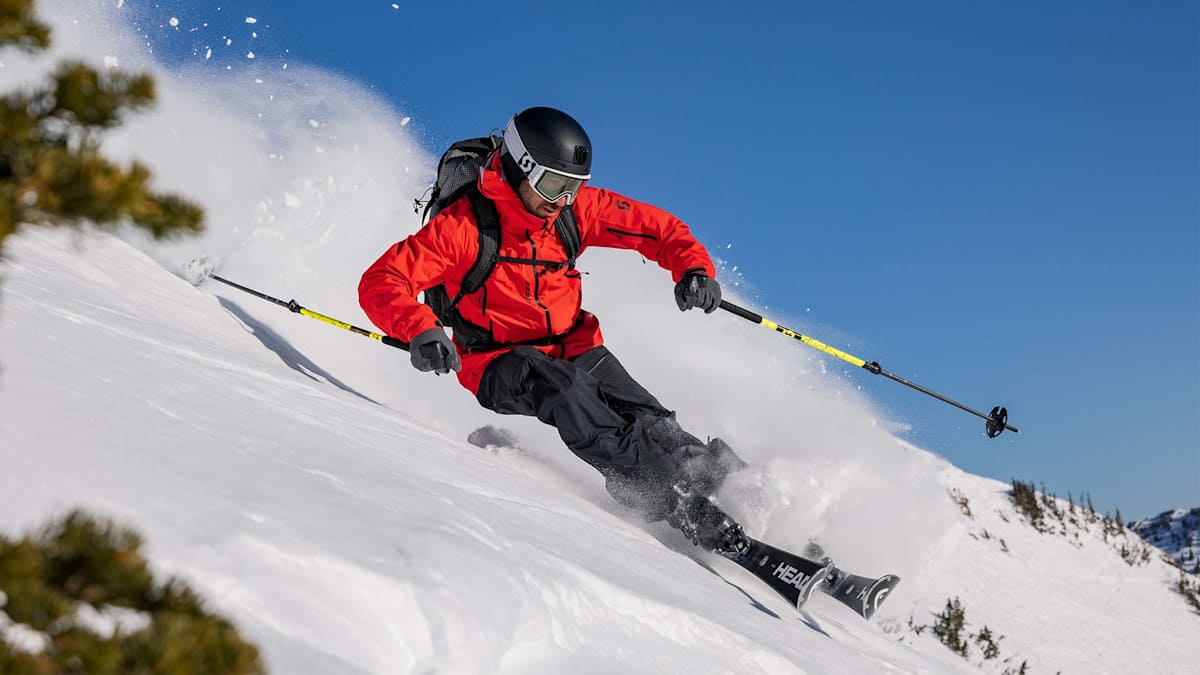
1958: The hula-hoop was invented; Paul Newman got married; “Tequila” was the top song in the U.S., but more importantly, Scott created the first aluminum tapered ski pole in Sun Valley, Idaho.
When you learn to ski as a child, the day you get your first poles is a big one, a milestone that moves you past the days of slowly doing the “pizza” down groomers. Poles are a critical but perhaps overlooked piece of ski equipment.
“When looking for a ski pole, I tend to reach for something that can withstand the test of time, something that will hold up against many years of mountain adventures and of course it's a bonus if a pole can bring a little color and pizazz,” says Scott athlete Caite Zeliff.
So, let’s get up to speed on ski poles: Why they’re important, how they’re constructed, and considerations when you’re choosing a pair of your own.
Why Are Ski Poles Important?
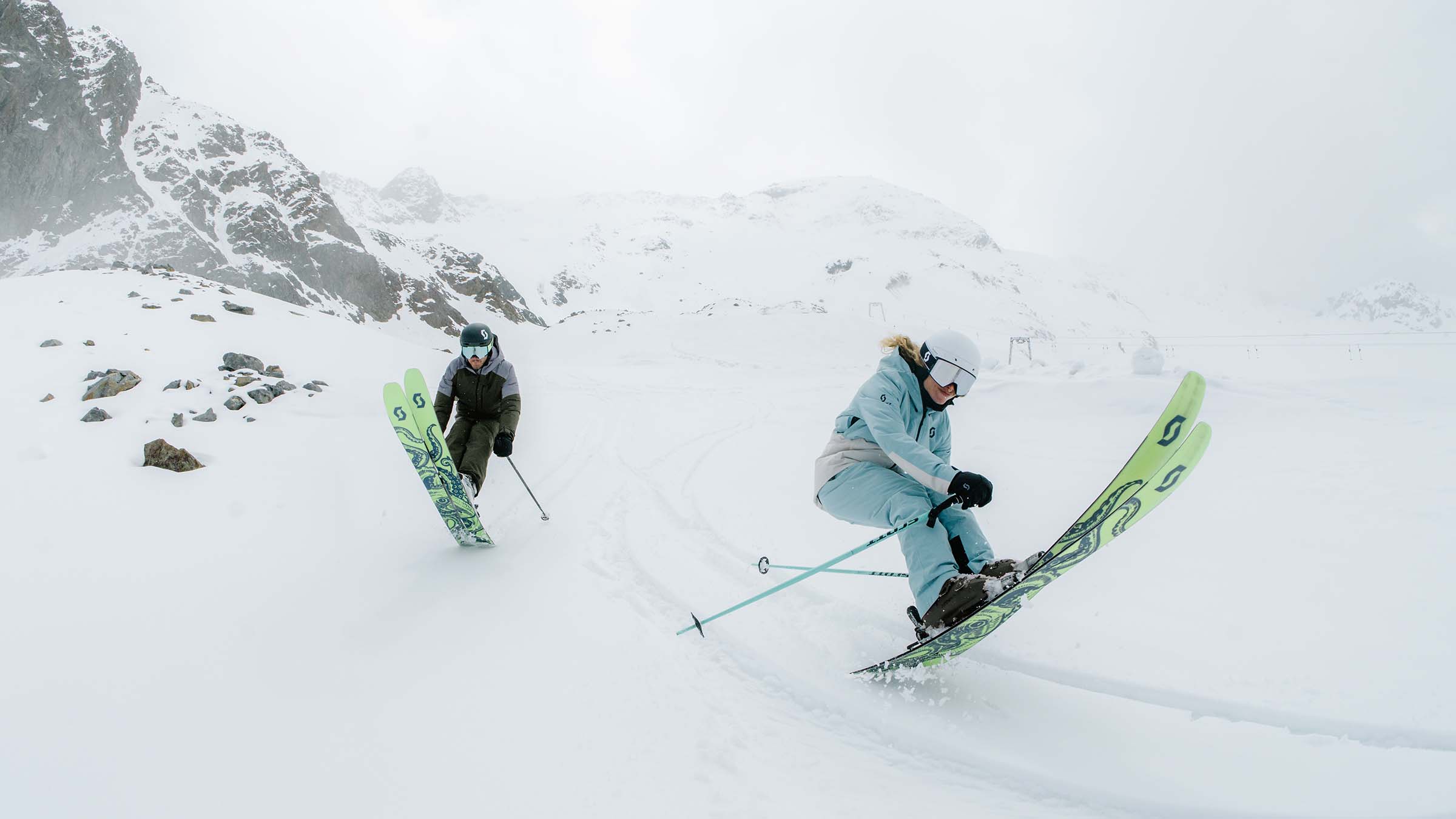
Poles are an essential part of good skiing technique. They help skiers balance, find rhythm in their turns, and, more practically, they help us traverse flat terrain. From those looking for a hidden powder stash to skiers simply trying to get back to their car, poles are essential.
What Makes Up a Ski Pole?
Grip: Quality poles have a durable, ergonomic, high-friction grip so you can hold on without much effort. This reduces hand fatigue, even in snowy or wet conditions.
Strap: Pole straps can be quite simple, but some skiers prefer an S.R.S, (Strap Release System), which can prevent injury by releasing from the pole grip if it is caught. The Scott Proguide C SRS is a good option for this feature.
Shaft: Simply put, this is the pole itself. Different shaft materials significantly affect weight, durability, and performance.
Basket: The right size basket will support your pole plants. That means bigger baskets for powder days (like the 85mm SEA) and smaller baskets for corduroy groomers so they don’t get in the way.
Tip: Finally, the pole’s tip leads the way by piercing the skiing surface. Naturally, a sharp pole tip is crucial for any condition from soft snow to ice.
How Do I Find the Right Size Ski Poles?
Just like any other piece of ski equipment, it all starts with the correct pole size for your body. The right length ski pole promotes good technique, balance, and plenty of stoke on any run on any mountain.
Here’s a simple rule of thumb (er, pole): Hold your ski pole upside-down with your hand right beneath the basket. Is your elbow at roughly a 90-degree angle? Good! If it is more than 90 degrees, the poles are too long, and vice-versa if your elbow is angled less than 90 degrees. Refer to our size chart for the best fit.
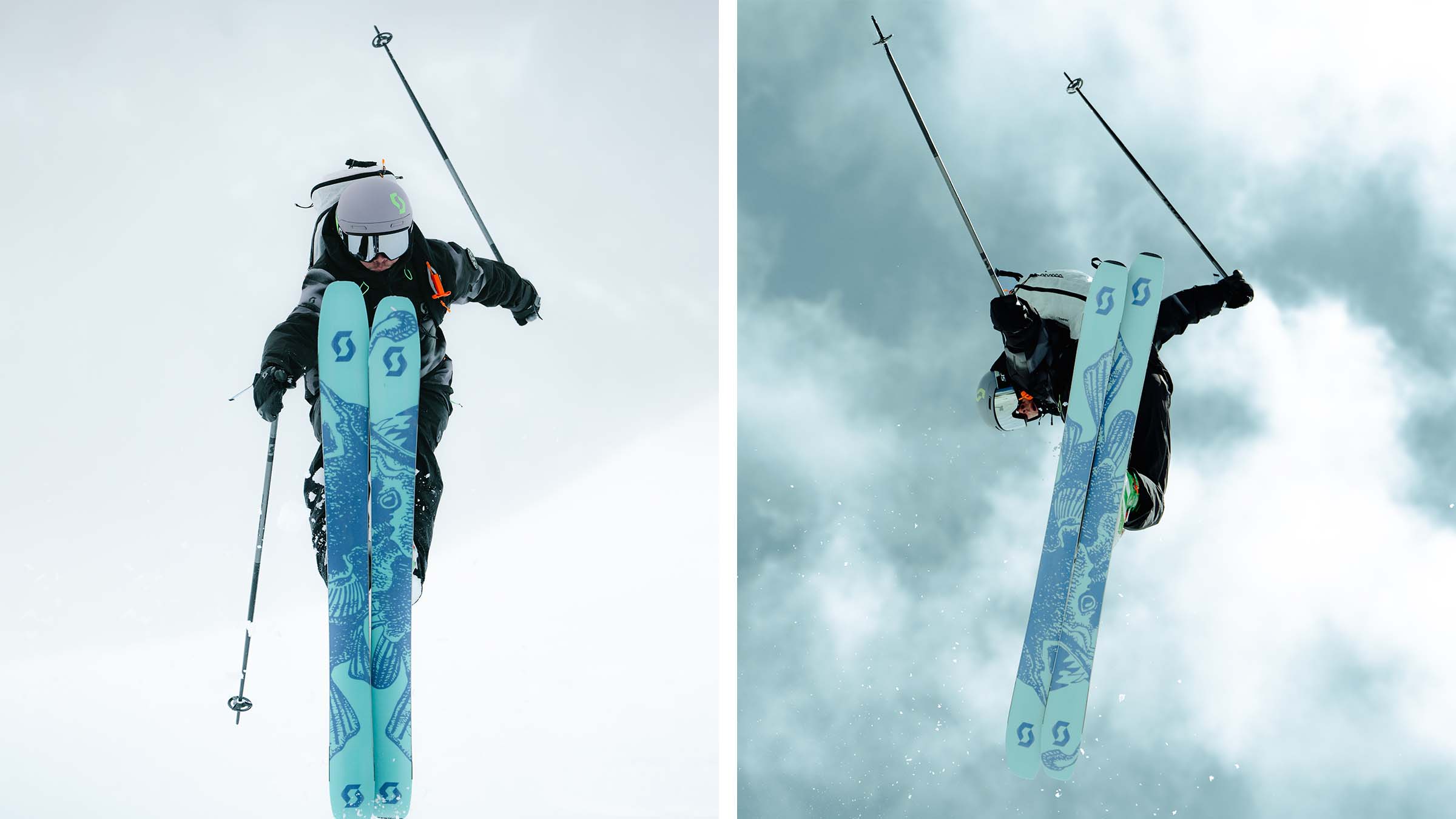
Attention hot-doggers: We recommend sizing down 10-20cm for freestyle skiing.
What Are the Key Differences Between Ski Pole Materials?
You have two general options for ski pole material: Aluminum and carbon fiber. As a tubular metal, aluminum is more durable and less expensive than carbon fiber. However, the more expensive composite material is significantly lighter weight.
Alloy ski pole options:
7075: High strength-to-weight ratio, commonly used in aerospace components. Example: Scott Team Issue SRS
6061: Corrosion resistant and strong, cheaper than 7075, found in automotive parts. Example: Aluguide
5083: Less strength than 6061, the most affordable option. Examples: Signature, Kira
Carbon ski pole options:
Carbon fiber: Lightweight with more vibration and impact dampening for a smoother ride.
Composite: Balanced weight and durability, typically a blend of carbon fiber and fiberglass. More flexible and vibration-dampening than alloy. Example: Pro Taper SRS
Which Poles Are Best for Backcountry Skiing/Ski Touring?
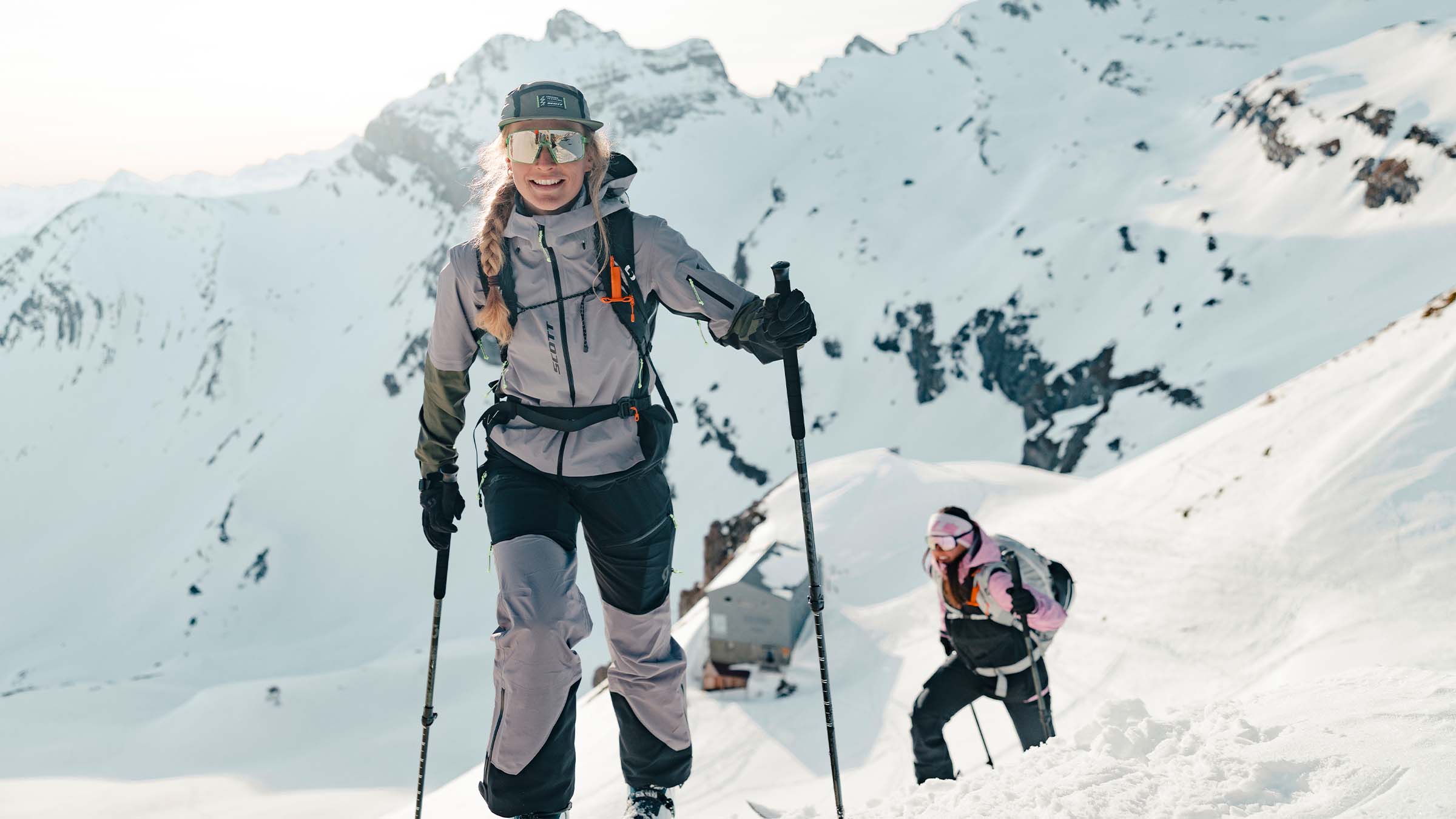
Since you need poles for everything from the steepest skin track to the steepest couloir, it should come as no surprise that backcountry ski poles need to be versatile to suit a wide range of terrain and needs.
Adjustable poles are a tried and true option for ski touring. By opening a small lever on the pole’s shaft, you can extend or retract a smaller-diameter inner shaft to adjust pole length. This gives skiers near infinite adjustability for ups, downs, flats, and anything else. Example: Proguide SRS.
Recently, some skiers have taken a shine to a simpler touring pole design that has an extended grip. This allows them to change their hand positions to easily compensate for uneven terrain or any other scenario in the backcountry. Example: FREE 18.
Of course, given that ski touring relies on human power to climb to the top of the run, many skiers opt for the lightest poles they can find, such as the Proguide C SRS.
Finally, since one of the best perks of backcountry skiing is untracked powder, choose poles with large baskets for more support in soft snow.
Conclusion
Good skiing technique begins with the right set of ski poles. Above all, make sure you have the correct length for your body and skiing style. Once you have the basics dialed in, you can choose the best material and other features for your budget and preferences.